Intuit Unified User Management
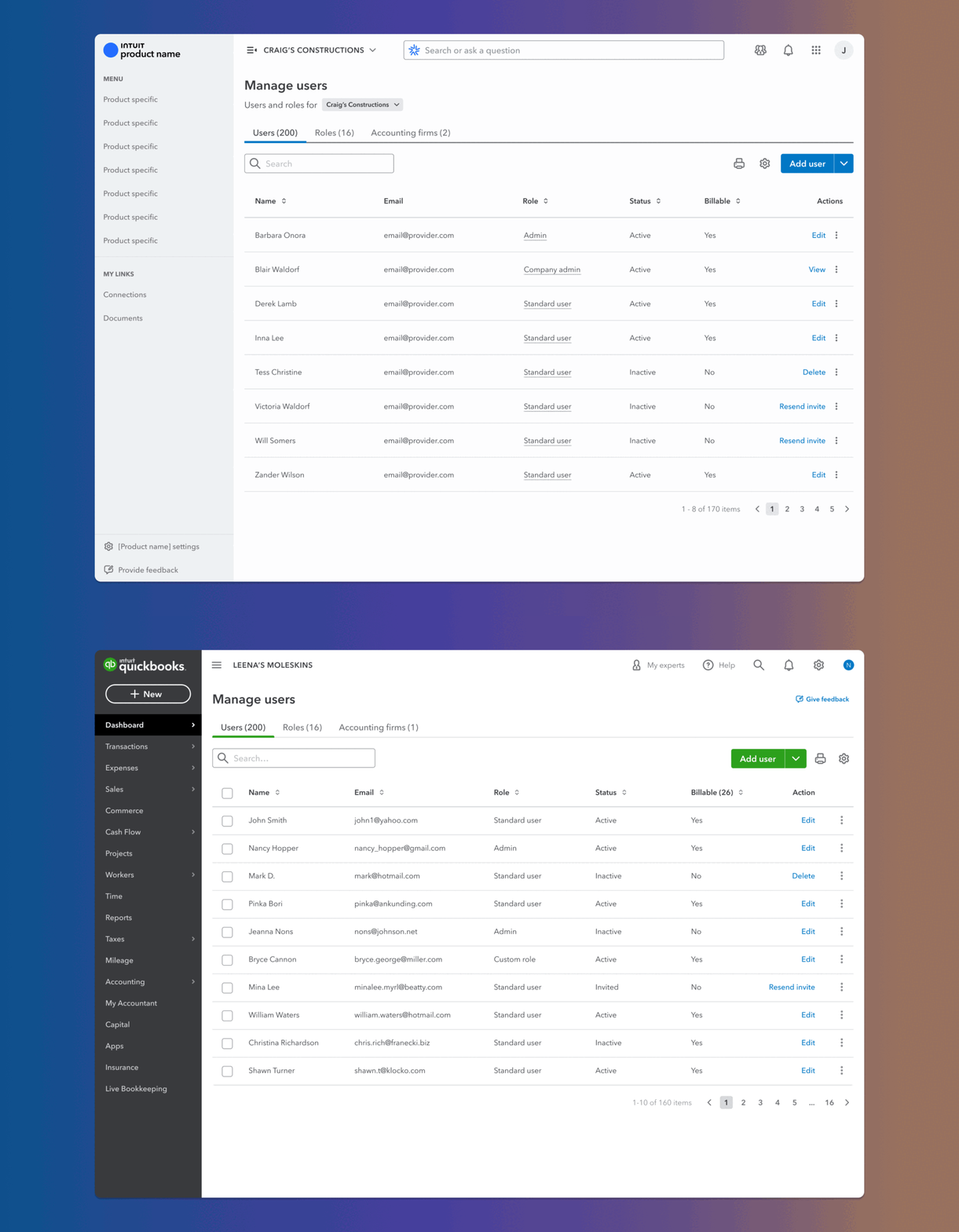
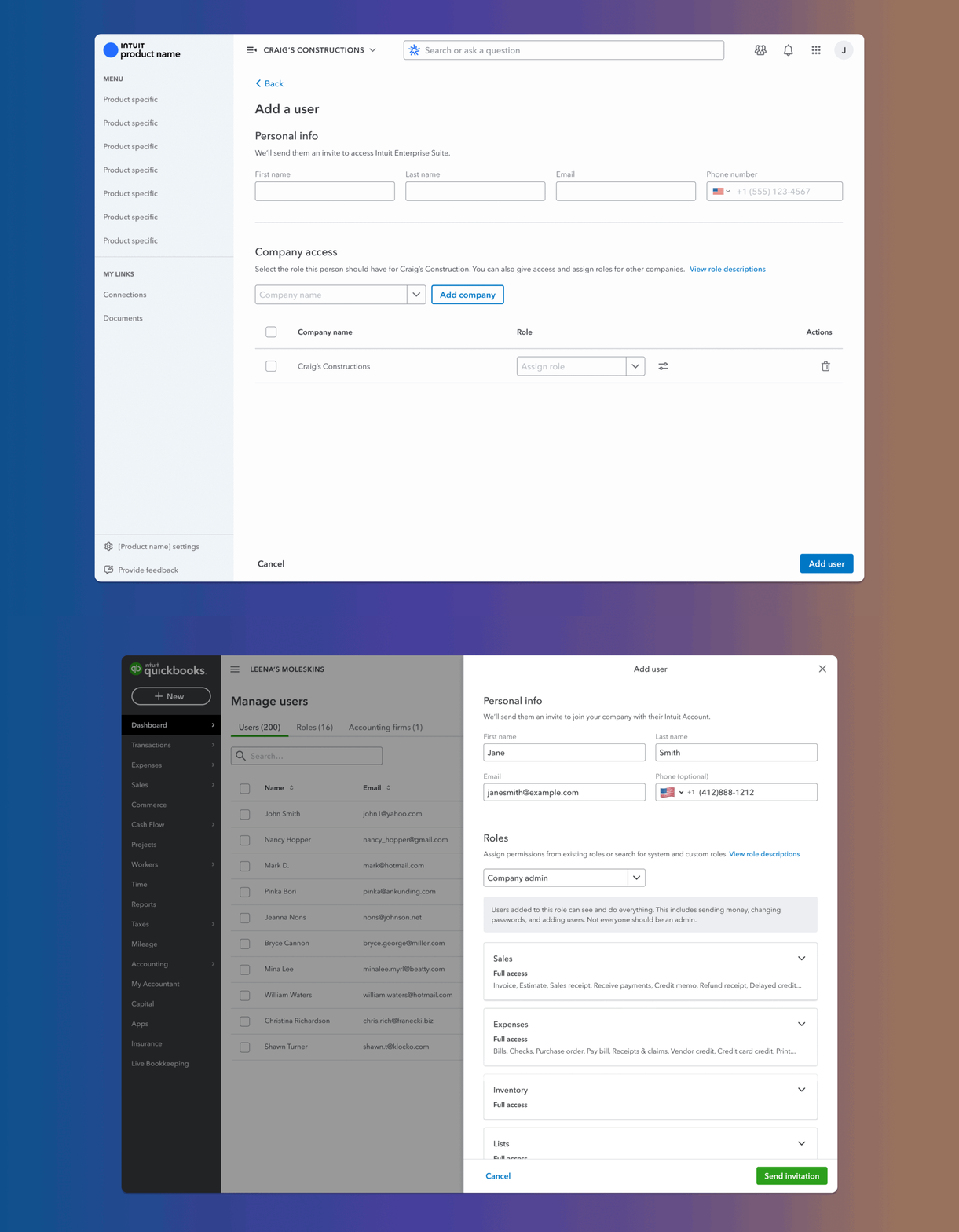
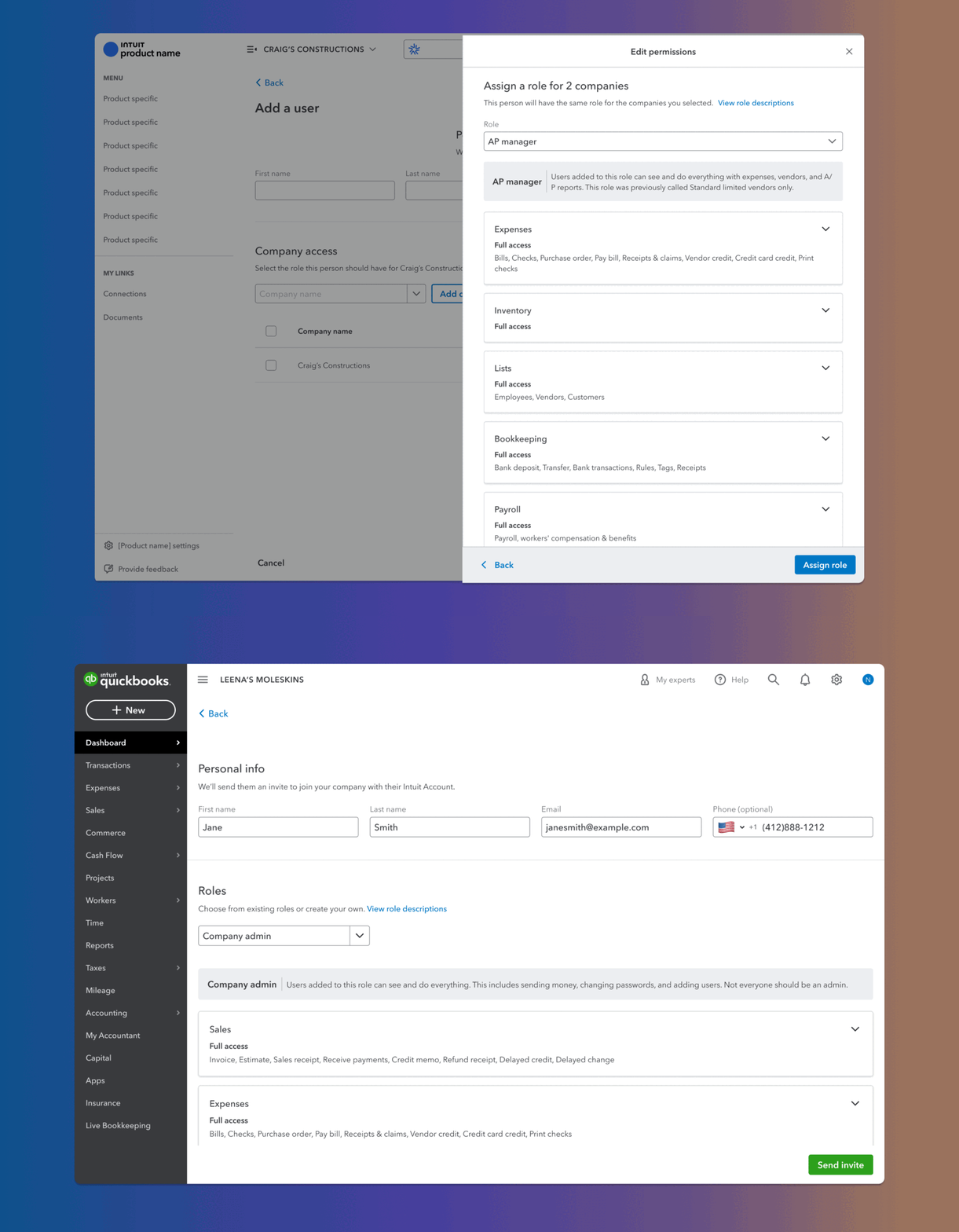
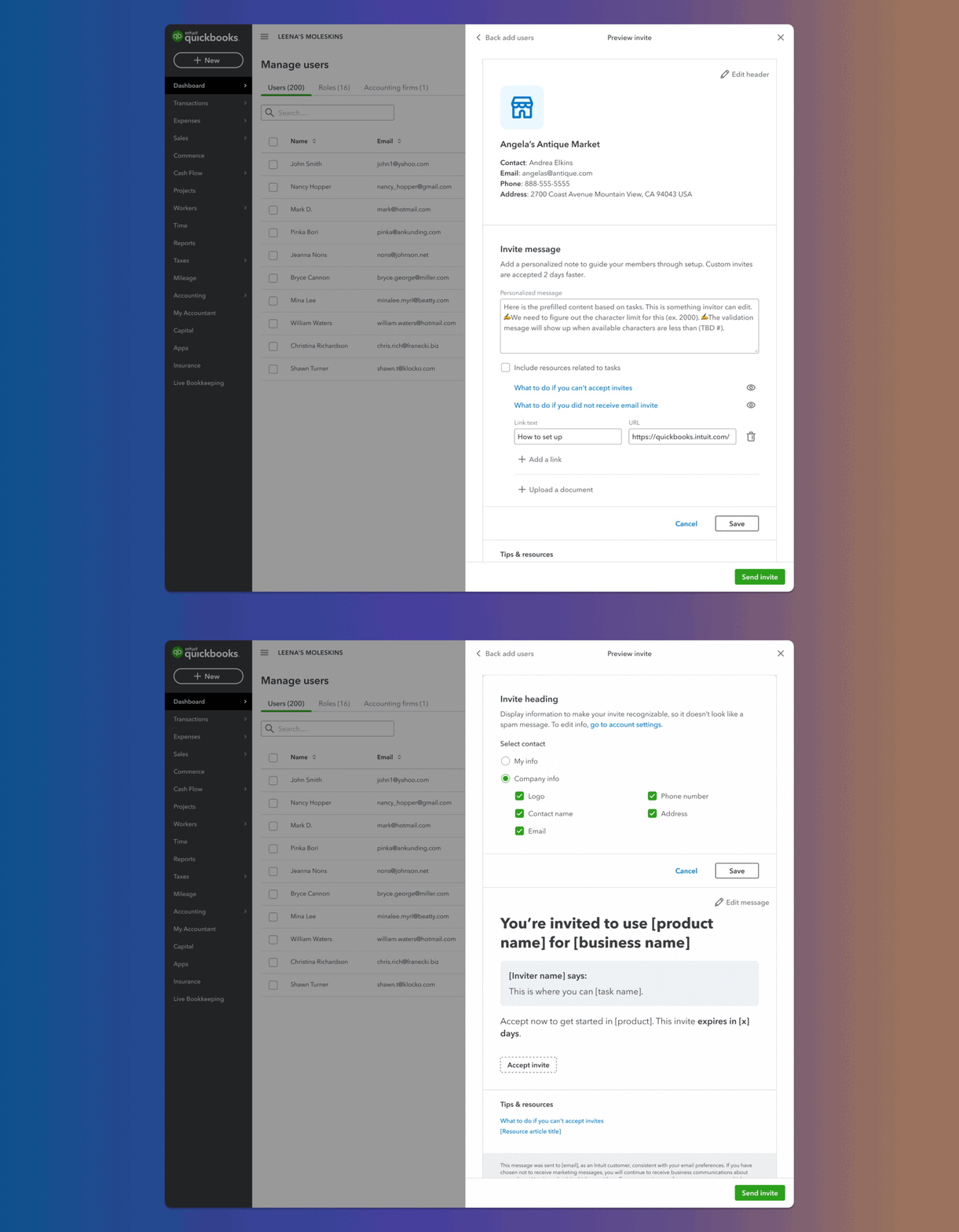
User management & invitations are durable experiences that power growth for our customers. The goal of Unified User Management was to create a singular experience that solves all Intuit use cases while enabling our business goals and product strategies.
2022-Present
Team
Product designer
Role
E2E driver
Engagement
Intuit - Platform
Timeline
2022-Present
Team
Product designer
Role
E2E driver
Engagement
Intuit - Platform
Timeline
2022-Present
Team
Product designer
Role
E2E driver
Engagement
Intuit - Platform
Timeline
2022-Present
Team
Product designer
Role
E2E driver
Engagement
Intuit - Platform
Timeline
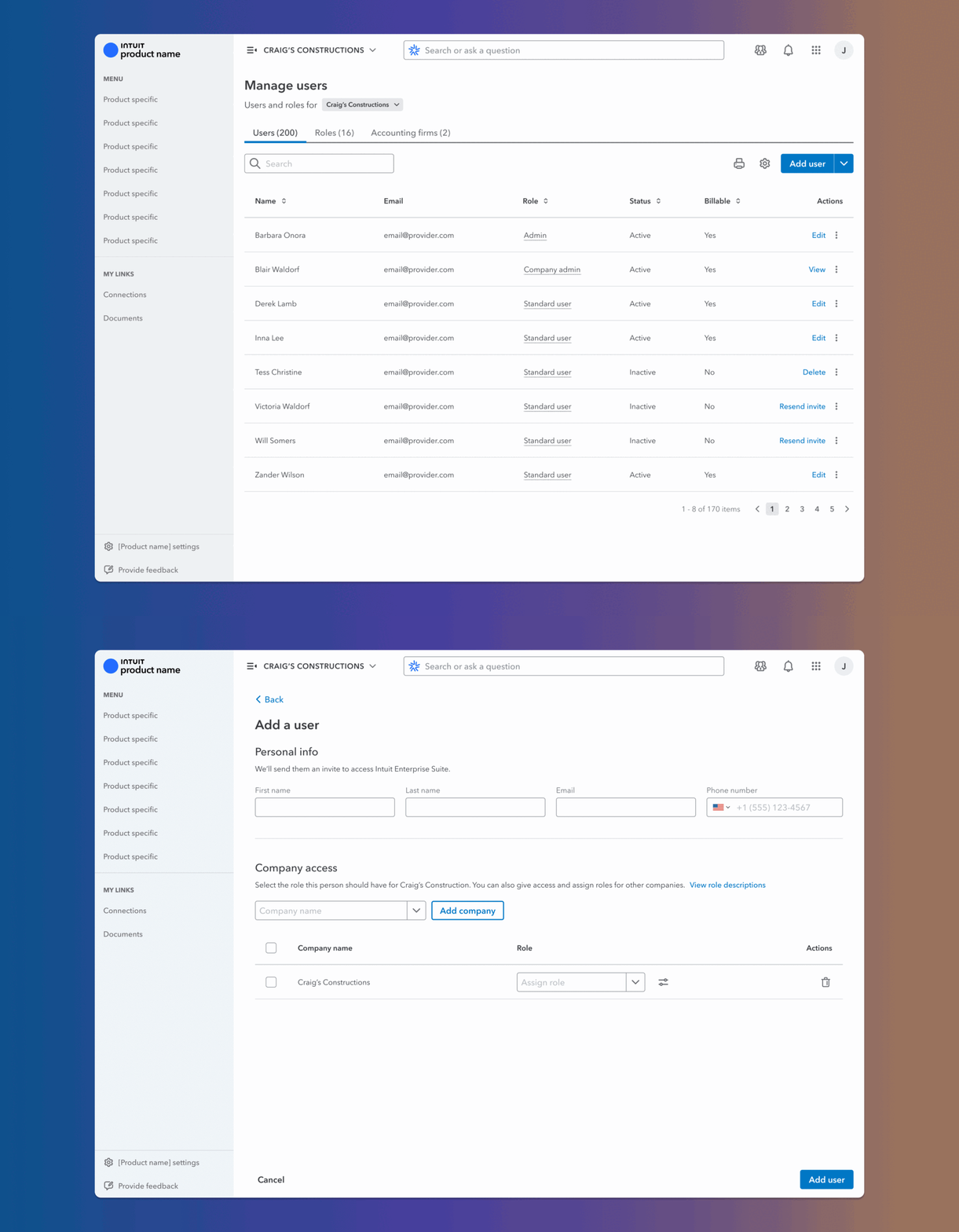
Customer Problem
As a small or medium-sized business managing workers and users in my account, I need a reusable and continuously improving customer experience for handling roles and invitations, so that I can efficiently manage my team without hassle.
Goal
The goal of Unified User Management was to create a singular experience that solves all Intuit use cases while enabling our business goals and product strategies.
Customer Problem
As a small or medium-sized business managing workers and users in my account, I need a reusable and continuously improving customer experience for handling roles and invitations, so that I can efficiently manage my team without hassle.
Goal
The goal of Unified User Management was to create a singular experience that solves all Intuit use cases while enabling our business goals and product strategies.
Customer Problem
As a small or medium-sized business managing workers and users in my account, I need a reusable and continuously improving customer experience for handling roles and invitations, so that I can efficiently manage my team without hassle.
Goal
The goal of Unified User Management was to create a singular experience that solves all Intuit use cases while enabling our business goals and product strategies.
Customer Problem
As a small or medium-sized business managing workers and users in my account, I need a reusable and continuously improving customer experience for handling roles and invitations, so that I can efficiently manage my team without hassle.
Goal
The goal of Unified User Management was to create a singular experience that solves all Intuit use cases while enabling our business goals and product strategies.
Business Problem
As a business, we want to reduce inefficiency and frustration stemming from inconsistent experiences, multiple clone services, and constrained features by offering a reusable user and role management experience, ensuring seamless customer experiences across our ecosystem, leveraging platform benefits (build once, repurpose), and increasing developer productivity for faster go-to-market.
Target market
We target small business owners/workers, mid-size business owners/workers, accountants/experts, wholesalers, and consumers. These users span across 9 QuickBooks SKUs, MailChimp, 2 Pro Tax SKUs, and 2 consumer products.
Business Problem
As a business, we want to reduce inefficiency and frustration stemming from inconsistent experiences, multiple clone services, and constrained features by offering a reusable user and role management experience, ensuring seamless customer experiences across our ecosystem, leveraging platform benefits (build once, repurpose), and increasing developer productivity for faster go-to-market.
Target market
We target small business owners/workers, mid-size business owners/workers, accountants/experts, wholesalers, and consumers. These users span across 9 QuickBooks SKUs, MailChimp, 2 Pro Tax SKUs, and 2 consumer products.
Business Problem
As a business, we want to reduce inefficiency and frustration stemming from inconsistent experiences, multiple clone services, and constrained features by offering a reusable user and role management experience, ensuring seamless customer experiences across our ecosystem, leveraging platform benefits (build once, repurpose), and increasing developer productivity for faster go-to-market.
Target market
We target small business owners/workers, mid-size business owners/workers, accountants/experts, wholesalers, and consumers. These users span across 9 QuickBooks SKUs, MailChimp, 2 Pro Tax SKUs, and 2 consumer products.
Business Problem
As a business, we want to reduce inefficiency and frustration stemming from inconsistent experiences, multiple clone services, and constrained features by offering a reusable user and role management experience, ensuring seamless customer experiences across our ecosystem, leveraging platform benefits (build once, repurpose), and increasing developer productivity for faster go-to-market.
Target market
We target small business owners/workers, mid-size business owners/workers, accountants/experts, wholesalers, and consumers. These users span across 9 QuickBooks SKUs, MailChimp, 2 Pro Tax SKUs, and 2 consumer products.
Team
UUM team consists of two scrums responsible for 3 segments of work. My role was to drive E2E product strategy with my counterpart as a domain owner and collaborate with cross-functional partners, scrum members, and product teams (adoption).
Cross-scrum
Product strategy, E2E
Jun Kim ✋🏼 Sr. Product designer, E2E
Emma, PM, E2E
Cross functional
Program manager
Content designer
Design Researcher
Data scientist
UM Scrum
User management
PM, Adoption
Jr. Product designer
Dev lead
Dev POC
AM Scrum
Access management
PM, Adoption
Product designer, CW
Dev lead
Dev POC
UUM team consists of two scrums responsible for 3 segments of work. My role was to drive E2E product strategy with my counterpart as a domain owner and collaborate with cross-functional partners, scrum members, and product teams (adoption).
Cross-scrum
Product strategy, E2E
Jun Kim ✋🏼 Sr. Product designer, E2E
Emma, PM, E2E
Cross functional
Program manager
Content designer
Design Researcher
Data scientist
UM Scrum
User management
PM, Adoption
Jr. Product designer
Dev lead
Dev POC
AM Scrum
Access management
PM, Adoption
Product designer, CW
Dev lead
Dev POC
UUM team consists of two scrums responsible for 3 segments of work. My role was to drive E2E product strategy with my counterpart as a domain owner and collaborate with cross-functional partners, scrum members, and product teams (adoption).
Cross-scrum
Product strategy, E2E
Jun Kim ✋🏼 Sr. Product designer, E2E
Emma, PM, E2E
Cross functional
Program manager
Content designer
Design Researcher
Data scientist
UM Scrum
User management
PM, Adoption
Jr. Product designer
Dev lead
Dev POC
AM Scrum
Access management
PM, Adoption
Product designer, CW
Dev lead
Dev POC
UUM team consists of two scrums responsible for 3 segments of work. My role was to drive E2E product strategy with my counterpart as a domain owner and collaborate with cross-functional partners, scrum members, and product teams (adoption).
Cross-scrum
Product strategy, E2E
Jun Kim ✋🏼 Sr. Product designer, E2E
Emma, PM, E2E
Cross functional
Program manager
Content designer
Design Researcher
Data scientist
UM Scrum
User management
PM, Adoption
Jr. Product designer
Dev lead
Dev POC
AM Scrum
Access management
PM, Adoption
Product designer, CW
Dev lead
Dev POC
Process
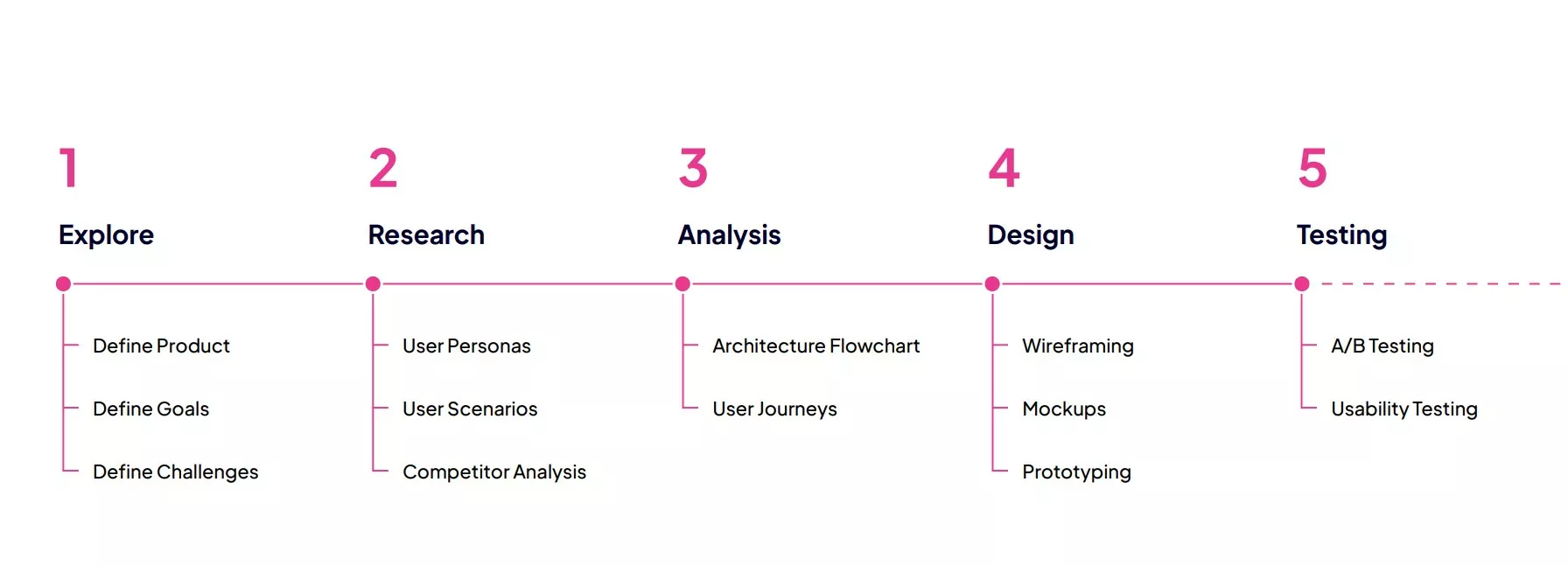
Design process is like a toolbox, and decisions on using the tools appropriately were made based on customer-centric and systems thinking.
Impact
16.5% reduction in customer care costs
Before the Unified User Management initiative, Intuit spent $1,320,120 annually (2021-2023) to troubleshoot over 50,000 calls related to user management. After implementation, customer care contacts dropped by 16.5% on average, with a record 22% reduction from February to May 2024. This significant decrease in support costs and improved efficiency positioned us as a core capability in the new Enterprise Suite for the mid-market segment.
34.3% Reduction in lost mid-market businesses
Intuit had been losing approximately 50,000 mid-market businesses to competitors each year, with Sage gaining 50% of its new U.S. customers from QuickBooks and NetSuite gaining 40%. By unifying user management experiences and offering a multi-entity model with granular access, we reduced the number of lost mid-market businesses by 34.3% as of March 2024.
Unifying 13+ bespoke experiences into one
We streamlined 13+ bespoke experiences, eliminating the need to invite the same user multiple times and addressing inefficient development and maintenance. Now, we offer composable experiences as reusable widgets, allowing for single setup across all products with granular access control and scalable solutions.
16.5% reduction in customer care costs
Before the Unified User Management initiative, Intuit spent $1,320,120 annually (2021-2023) to troubleshoot over 50,000 calls related to user management. After implementation, customer care contacts dropped by 16.5% on average, with a record 22% reduction from February to May 2024. This significant decrease in support costs and improved efficiency positioned us as a core capability in the new Enterprise Suite for the mid-market segment.
34.3% Reduction in lost mid-market businesses
Intuit had been losing approximately 50,000 mid-market businesses to competitors each year, with Sage gaining 50% of its new U.S. customers from QuickBooks and NetSuite gaining 40%. By unifying user management experiences and offering a multi-entity model with granular access, we reduced the number of lost mid-market businesses by 34.3% as of March 2024.
Unifying 13+ bespoke experiences into one
We streamlined 13+ bespoke experiences, eliminating the need to invite the same user multiple times and addressing inefficient development and maintenance. Now, we offer composable experiences as reusable widgets, allowing for single setup across all products with granular access control and scalable solutions.
16.5% reduction in customer care costs
Before the Unified User Management initiative, Intuit spent $1,320,120 annually (2021-2023) to troubleshoot over 50,000 calls related to user management. After implementation, customer care contacts dropped by 16.5% on average, with a record 22% reduction from February to May 2024. This significant decrease in support costs and improved efficiency positioned us as a core capability in the new Enterprise Suite for the mid-market segment.
34.3% Reduction in lost mid-market businesses
Intuit had been losing approximately 50,000 mid-market businesses to competitors each year, with Sage gaining 50% of its new U.S. customers from QuickBooks and NetSuite gaining 40%. By unifying user management experiences and offering a multi-entity model with granular access, we reduced the number of lost mid-market businesses by 34.3% as of March 2024.
Unifying 13+ bespoke experiences into one
We streamlined 13+ bespoke experiences, eliminating the need to invite the same user multiple times and addressing inefficient development and maintenance. Now, we offer composable experiences as reusable widgets, allowing for single setup across all products with granular access control and scalable solutions.
16.5% reduction in customer care costs
Before the Unified User Management initiative, Intuit spent $1,320,120 annually (2021-2023) to troubleshoot over 50,000 calls related to user management. After implementation, customer care contacts dropped by 16.5% on average, with a record 22% reduction from February to May 2024. This significant decrease in support costs and improved efficiency positioned us as a core capability in the new Enterprise Suite for the mid-market segment.
34.3% Reduction in lost mid-market businesses
Intuit had been losing approximately 50,000 mid-market businesses to competitors each year, with Sage gaining 50% of its new U.S. customers from QuickBooks and NetSuite gaining 40%. By unifying user management experiences and offering a multi-entity model with granular access, we reduced the number of lost mid-market businesses by 34.3% as of March 2024.
Unifying 13+ bespoke experiences into one
We streamlined 13+ bespoke experiences, eliminating the need to invite the same user multiple times and addressing inefficient development and maintenance. Now, we offer composable experiences as reusable widgets, allowing for single setup across all products with granular access control and scalable solutions.
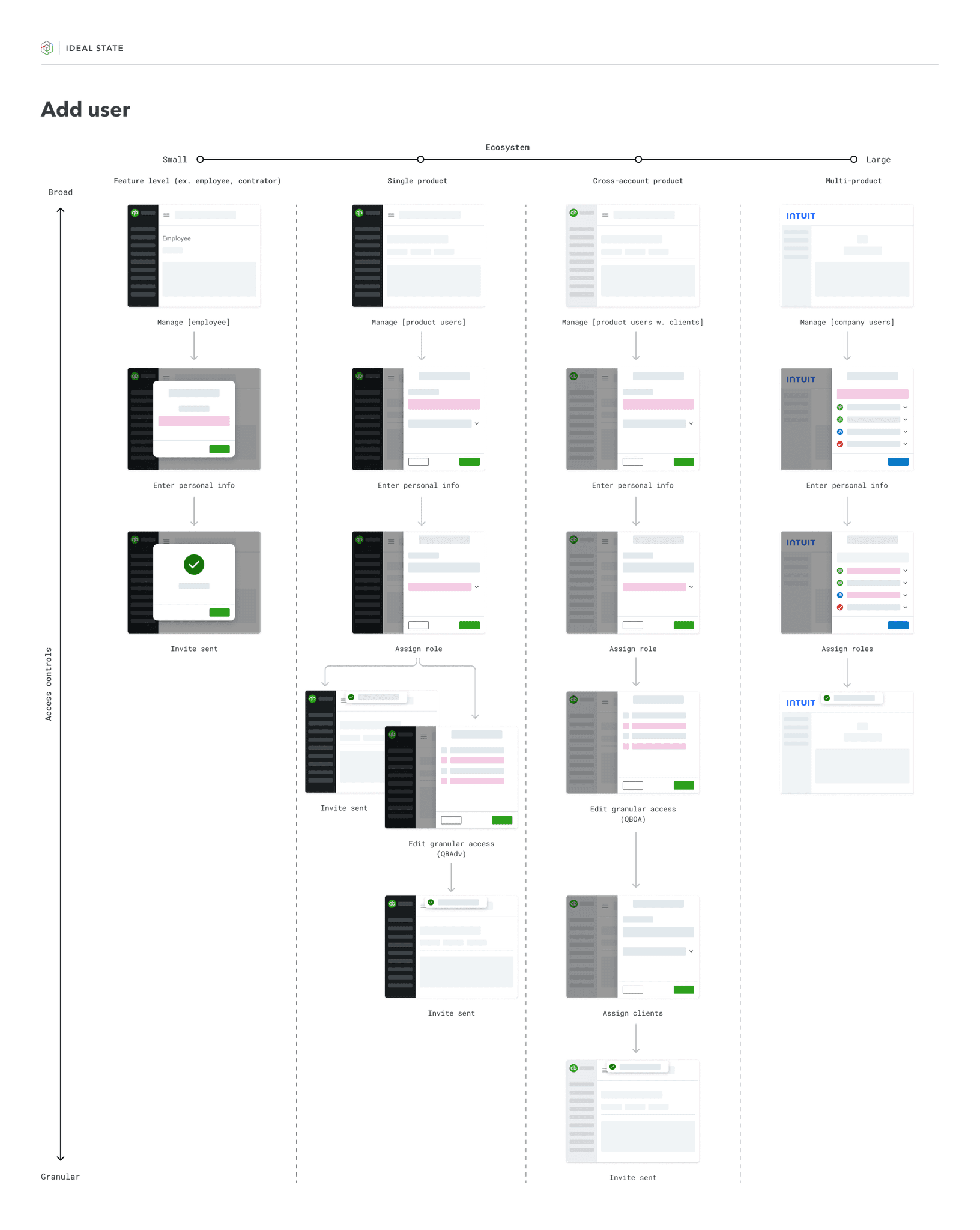
Ideal state
The north start design for a future state where an important customer problem or opportunity has been solved to such an amazing degree that the outcome seems almost impossible.
Ideal state
The north start design for a future state where an important customer problem or opportunity has been solved to such an amazing degree that the outcome seems almost impossible.
Ideal state
The north start design for a future state where an important customer problem or opportunity has been solved to such an amazing degree that the outcome seems almost impossible.
Ideal state
The north start design for a future state where an important customer problem or opportunity has been solved to such an amazing degree that the outcome seems almost impossible.
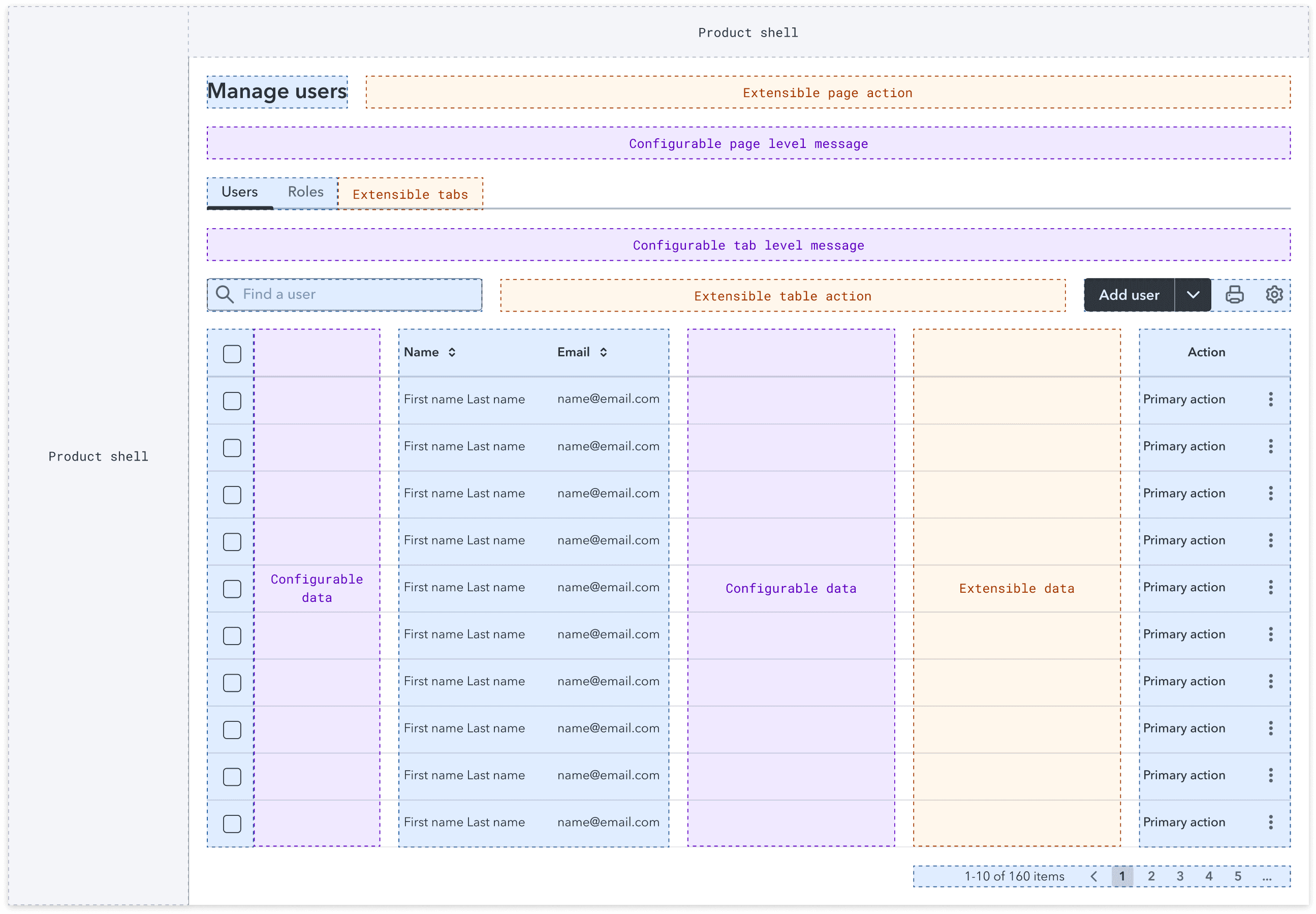
Design framework
Unified:
A set of requirements specific to a shared experience regardless of the product.
Themable:
A design system visual attribute that changes to express product personality.
Configurable:
A set of requirements that are customizable based on context.
Extensible:
An open area for product specific needs and data that do not store in Identity.
Design framework
Unified:
A set of requirements specific to a shared experience regardless of the product.
Themable:
A design system visual attribute that changes to express product personality.
Configurable:
A set of requirements that are customizable based on context.
Extensible:
An open area for product specific needs and data that do not store in Identity.
Design framework
Unified:
A set of requirements specific to a shared experience regardless of the product.
Themable:
A design system visual attribute that changes to express product personality.
Configurable:
A set of requirements that are customizable based on context.
Extensible:
An open area for product specific needs and data that do not store in Identity.
Customer Interview
Unified:
A set of requirements specific to a shared experience regardless of the product.
Themable:
A design system visual attribute that changes to express product personality.
Configurable:
A set of requirements that are customizable based on context.
Extensible:
An open area for product specific needs and data that do not store in Identity.
Research
Decisions on using the design method appropriately should be based on customer-centric and systems thinking.
Audit
Product flow
Customer highlights
Internal audit
External audit
Tech dependencies
Qualitative
40% of businesses say one of the top 3 reasons to consider replacing their accounting and financial management solution is that they “Need a more innovative solution to support growth.”
Voice of customers
“I need to prevent my sale’s person from editing/deleting invoices or information related to customers. The current gives full access to create/edit & delete which represent a security issue.”
- JG, Small business owner
Audit
Product flow
Customer highlights
Internal audit
External audit
Tech dependencies
Qualitative
40% of businesses say one of the top 3 reasons to consider replacing their accounting and financial management solution is that they “Need a more innovative solution to support growth.”
Voice of customers
“I need to prevent my sale’s person from editing/deleting invoices or information related to customers. The current gives full access to create/edit & delete which represent a security issue.”
- JG, Small business owner
Audit
Product flow
Customer highlights
Internal audit
External audit
Tech dependencies
Qualitative
40% of businesses say one of the top 3 reasons to consider replacing their accounting and financial management solution is that they “Need a more innovative solution to support growth.”
Voice of customers
“I need to prevent my sale’s person from editing/deleting invoices or information related to customers. The current gives full access to create/edit & delete which represent a security issue.”
- JG, Small business owner
Audit
Product flow
Customer highlights
Internal audit
External audit
Tech dependencies
Qualitative
40% of businesses say one of the top 3 reasons to consider replacing their accounting and financial management solution is that they “Need a more innovative solution to support growth.”
Voice of customers
“I need to prevent my sale’s person from editing/deleting invoices or information related to customers. The current gives full access to create/edit & delete which represent a security issue.”
- JG, Small business owner
Quantitative testing
Through quantitative testing, we were able to improve usability issues that we initially did not think would be problematic for customers. Notably, this included the decision between using a full page container vs. a drawer pattern for adding users. More recently, results showed that the progress step pattern is preferred over linear input by more than 73%, significantly aiding in addressing mid-market issues.
Quantitative testing
Through quantitative testing, we were able to improve usability issues that we initially did not think would be problematic for customers. Notably, this included the decision between using a full page container vs. a drawer pattern for adding users. More recently, results showed that the progress step pattern is preferred over linear input by more than 73%, significantly aiding in addressing mid-market issues.
Quantitative testing
Through quantitative testing, we were able to improve usability issues that we initially did not think would be problematic for customers. Notably, this included the decision between using a full page container vs. a drawer pattern for adding users. More recently, results showed that the progress step pattern is preferred over linear input by more than 73%, significantly aiding in addressing mid-market issues.
Quantitative testing
Through quantitative testing, we were able to improve usability issues that we initially did not think would be problematic for customers. Notably, this included the decision between using a full page container vs. a drawer pattern for adding users. More recently, results showed that the progress step pattern is preferred over linear input by more than 73%, significantly aiding in addressing mid-market issues.
Implementation and QA
As mentioned in the impact, the 22% reduction from February to May 2024 would not have been possible without real-time bug bashes, backlog reviews, and weekly quality reviews with our dev and PM partners.
Implementation and QA
As mentioned in the impact, the 22% reduction from February to May 2024 would not have been possible without real-time bug bashes, backlog reviews, and weekly quality reviews with our dev and PM partners.
Implementation and QA
As mentioned in the impact, the 22% reduction from February to May 2024 would not have been possible without real-time bug bashes, backlog reviews, and weekly quality reviews with our dev and PM partners.
Implementation and QA
As mentioned in the impact, the 22% reduction from February to May 2024 would not have been possible without real-time bug bashes, backlog reviews, and weekly quality reviews with our dev and PM partners.
Takeaways
Partnering with this extensive range of scrum and product teams has been one of the most valuable experiences of my career. The massive size of the project made it difficult at times, and achieving product parity was the biggest challenge. However, taking an approach grounded in framework and system mindset proved to be successful. It was a process that integrated not just a visual framework, but also data and customer use cases. I am grateful for the opportunity to participate in new product launches and contribute to the design systems team. Above all, I had numerous opportunities to perform roles beyond that of a designer, leveraging product manager acumen and tech acumen, which was my greatest learning experience.
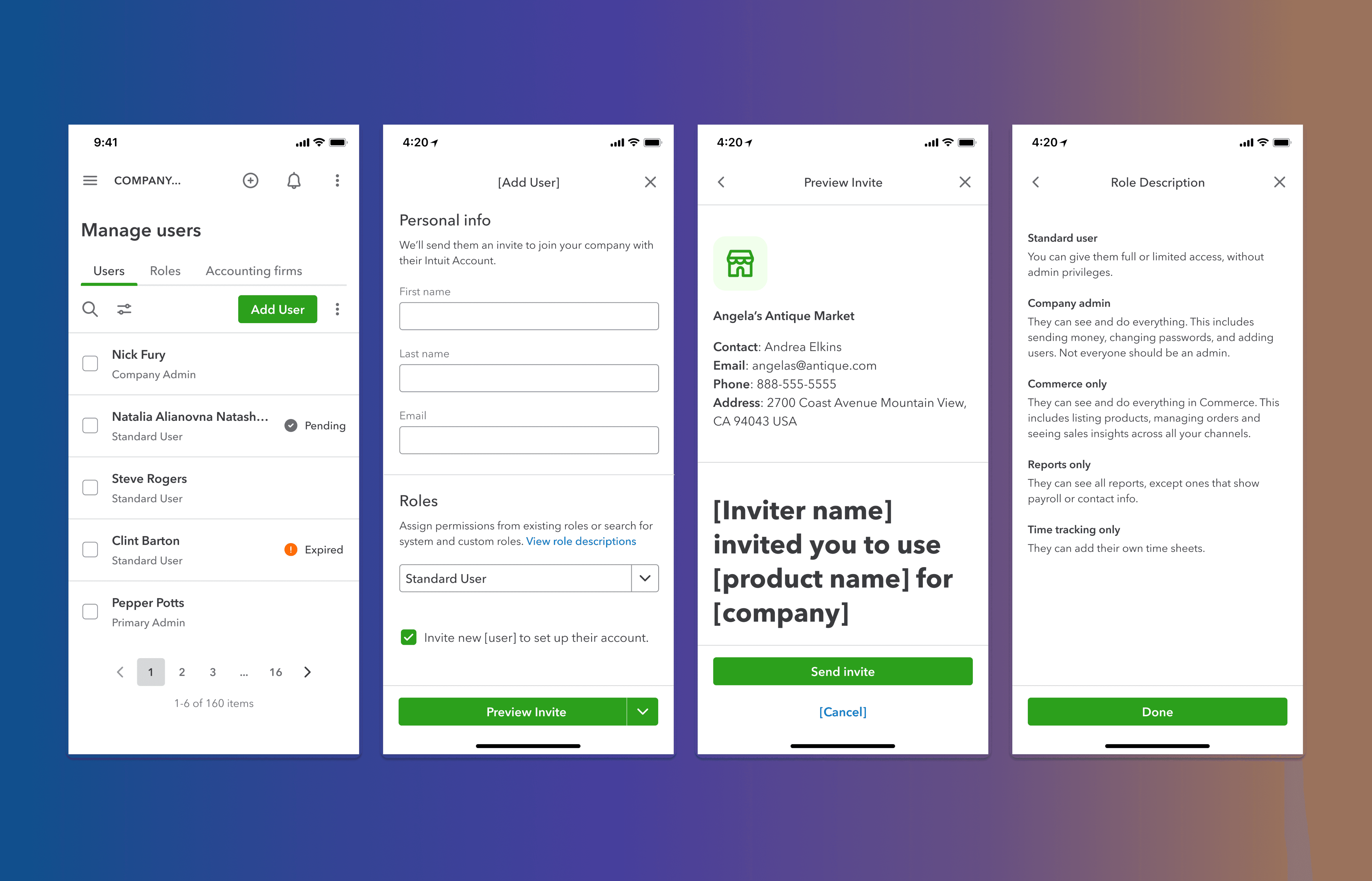
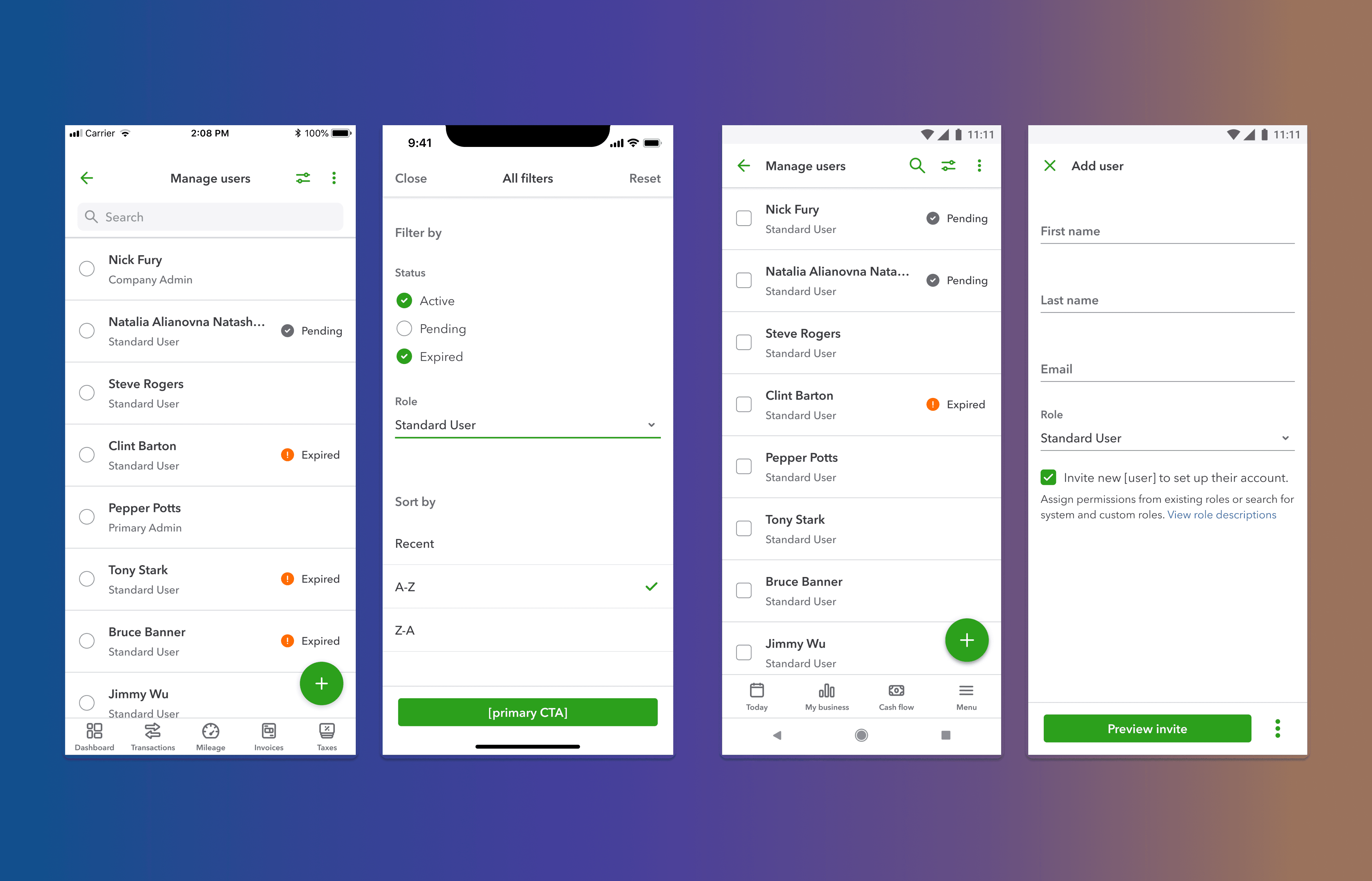
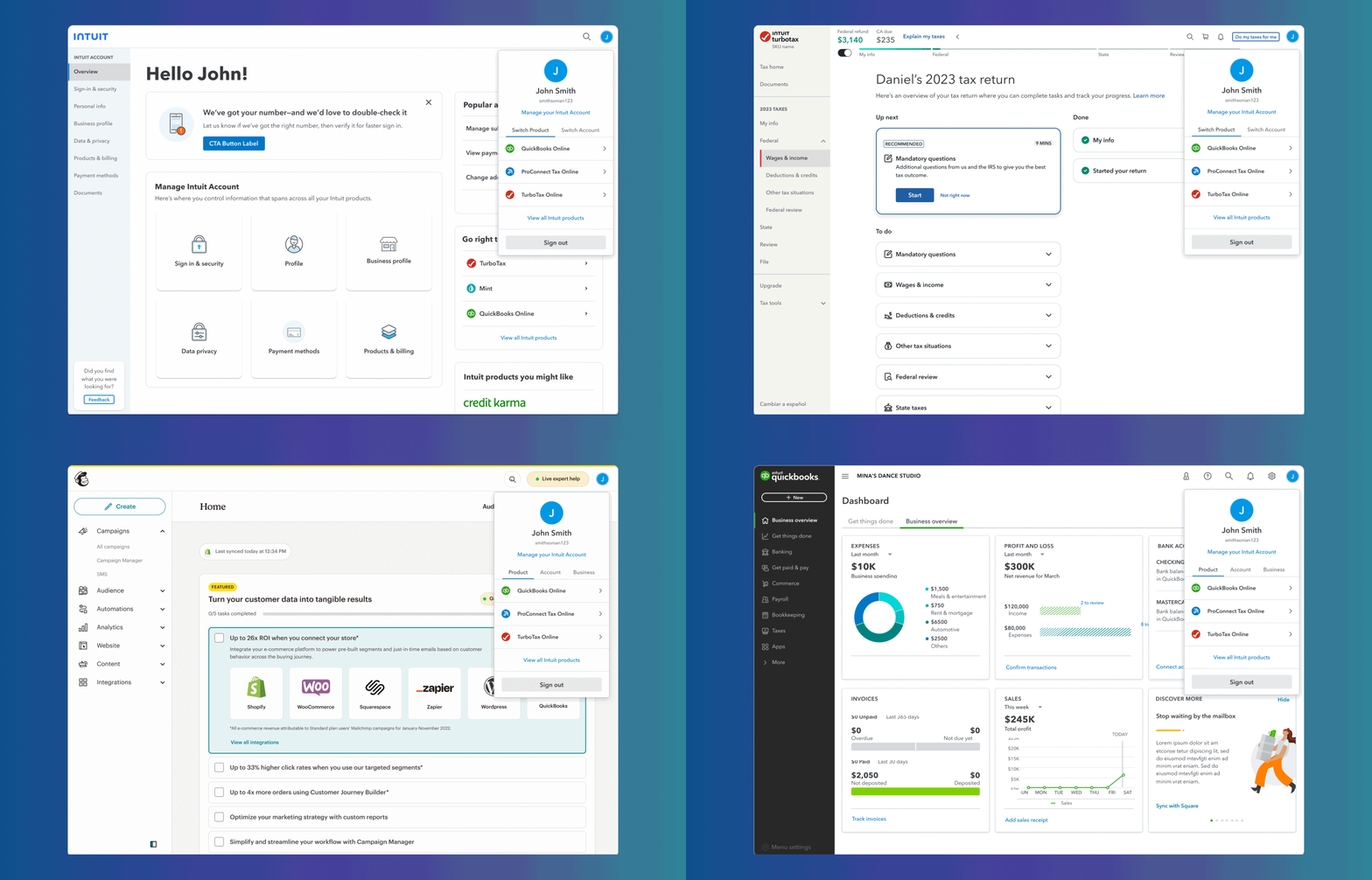
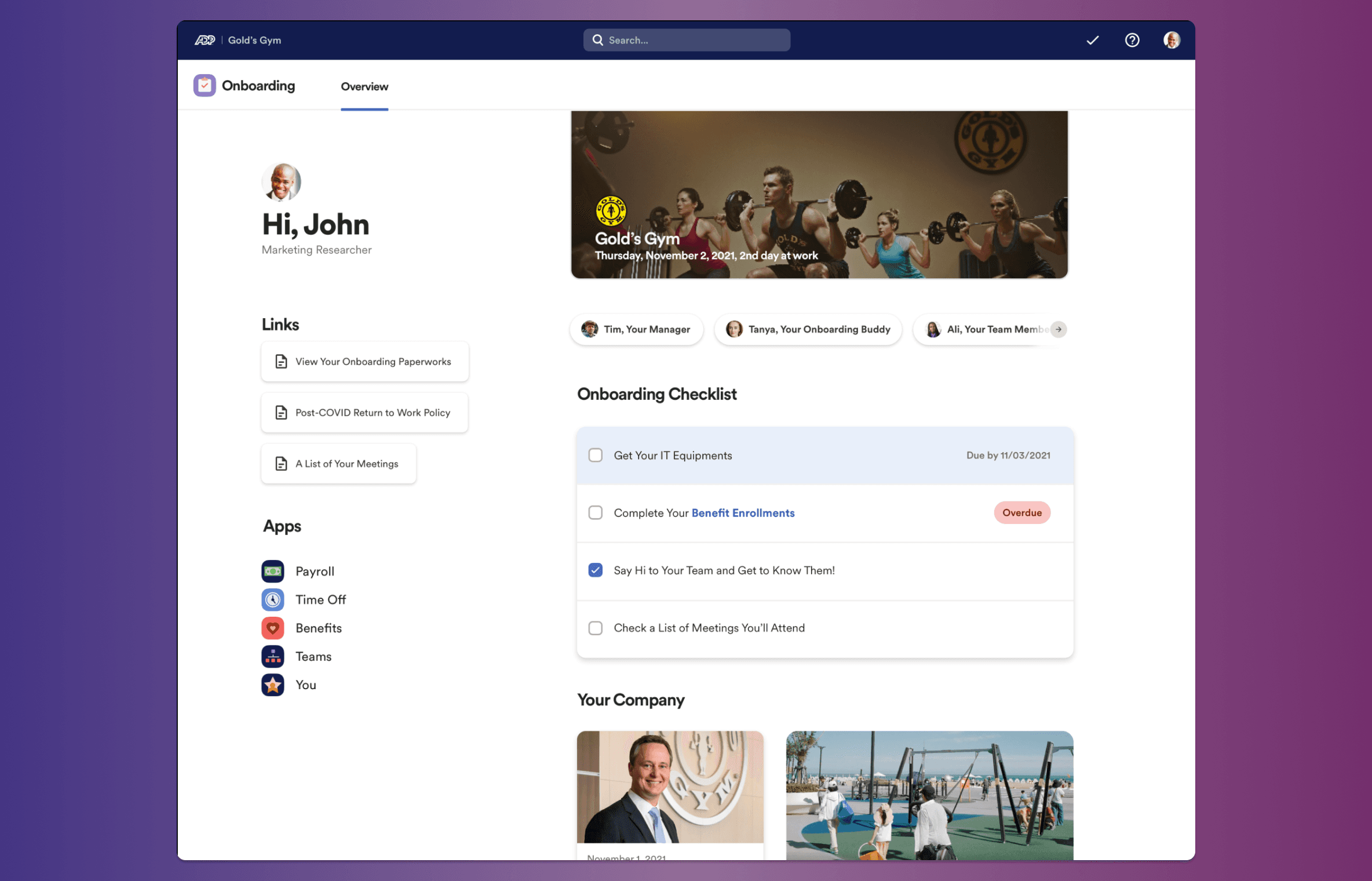
Final screens
Remember why we do this
2026
Jun Kim
Remember why we do this
2026
Jun Kim
Remember why we do this
2026
Jun Kim
Remember why we do this
2026
Jun Kim